
Earns less = Gains more
Unfortunately, the equation does not work with equity. It only works with obesity, because obesity is highest among the people on low incomes. And here is why: since a healthy, high-quality diet costs five times as much as one high in calories from fats, sugar, and salt (but low in essential nutrients like vitamins, minerals, and fiber), people on low incomes simply can´t afford it.
Therefore, obesity is not only a health problem; it is a social, political, and environmental problem deeply intertwined with the inner workings of the food industry, markets, and politics.
The WHO’s data should be a global wake-up call:
- In 2022, 1 in 8 people in the world were living with obesity.
- Worldwide adult obesity has more than doubled since 1990, and adolescent obesity has quadrupled.
- In 2022, 2.5 billion adults (18 years and older) were overweight. Of these, 890 million were living with obesity.
- In 2022, 43% of adults aged 18 years and over were overweight, and 16% were living with obesity.
- In 2024, 35 million children under the age of 5 were overweight.
- Over 390 million children and adolescents aged 5–19 years were overweight in 2022, including 160 million who were living with obesity.
Given the seriousness of the situation, it is difficult to understand why most governments prefer to keep oil and gas subsidies while providing barely any for fruit and vegetables.
The International Monetary Fund (IMF) has reported a total of $7 trillion ($2 trillion increase since 2020) globally in all subsidies to oil companies (explicit and implicit) for the year 2022.
While data on the total amount of subsidies for fruit and vegetables is unavailable, we do know that these subsidies are less than 10% of total agricultural subsidies to farmers, with most going to commodity crops like corn and soy.
Directing more subsidies to boost healthy food purchases and consumption is a direct benefit to society and the environment. From increasing productivity to reducing medical costs, from reducing GHG emissions to increasing biodiversity, promoting more nutritious foods, such as fruit and vegetables, can make an enormous positive impact.
And it doesn´t take much.
Studies show that a 20% price reduction results in a 17% increase in the purchase of fruit and vegetables. If the subsidies were available to offset the price reduction, the increased consumption would, over time, balance the gap, leading to fewer subsidies being needed.
There is no sustainability without trade-offs. And I am fully aware that finding balance is a gigantic task. However, it is realistic.
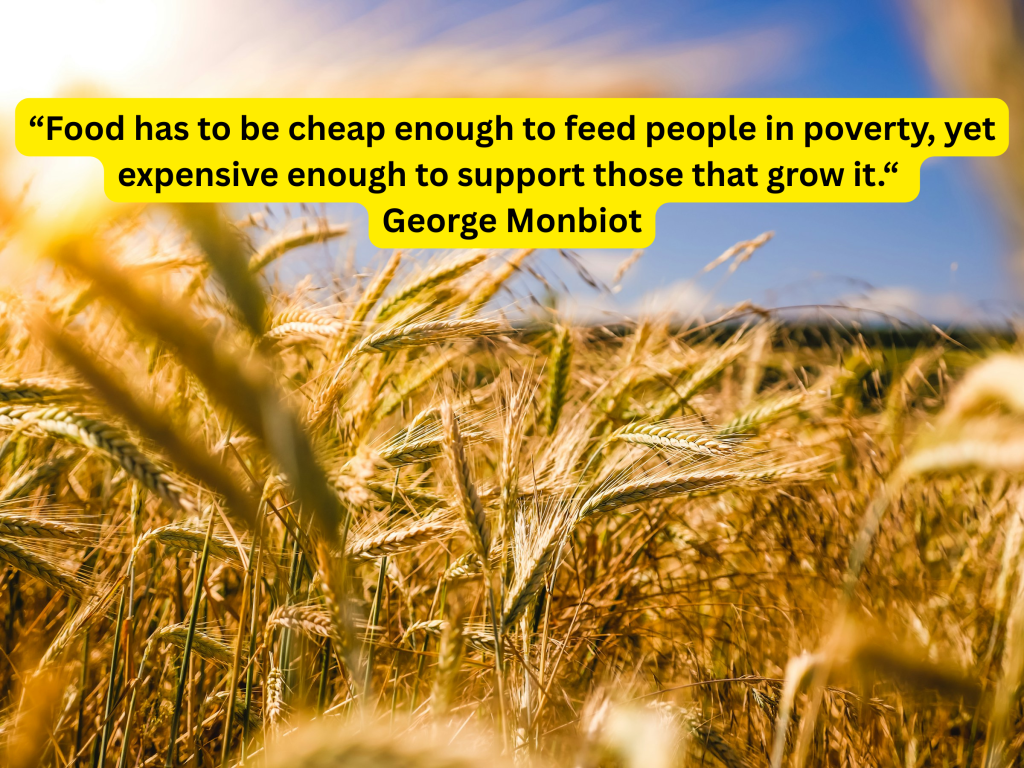
The way out of the ‘Earns less = Gains more’ equation is working towards the ‘social arithmetic’ in the food industry, proposed by George Monbiot when saying:
“Food has to be cheap enough to feed people in poverty, yet expensive enough to support those that grow it“.
 Boris Matijas