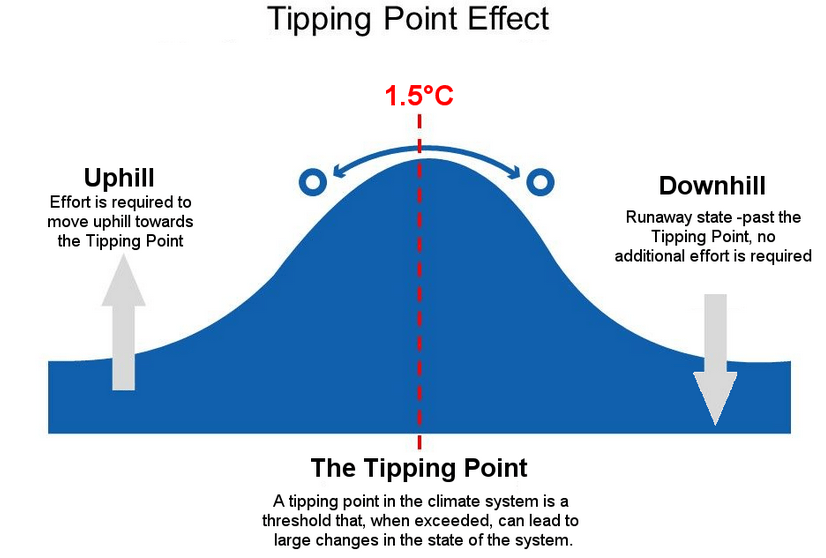
This evolutionary transition to a new level of organization can be compared to the shift from foragers to farmers, although we call it the shift from free riders to frontrunners.
The question between foraging and farming was never between independence and dependence. Despite the tribal resistance to the new, sedentary lifestyle, it was about common pull resources and collective action. Initially, the risky nature of farming, exposed to extreme events that could destroy entire harvests, was offering the tribal leaders, shamans, and other influencers a strong argument to convince their followers against joining the Neolithic Revolution. However, the growing tribe population, combined with changing ecosystems, exposed the foragers to the Tragedy of the Commons. Here is how Tim Lenton writes about it: «Putting extra labour into foraging had diminished results, as food from the same area was divided between more people. Whereas putting extra labour into farming had stable results because farming land could be expanded»
And so, slowly but steadily, between 10,000 and 5,000 years ago, growing complexity propelled human evolution and transformed human societies from foraging to farming. The rest of the story is well known. The climate-stable Holocene provided us with conditions to thrive and flourish. It tipped us over into the period of continuously accelerating pace in the succession between the two phases that define all progress and innovation: the exploitation of accumulated knowledge and the exploration of new knowledge.
Social complexity is a by-product of the human constant drive for solving problems. The better we get at finding solutions, the shorter the periods of exploration become. But, then the paradox of externalities arises from the fact that has for so long been neglected; very often, today’s solutions become tomorrow’s problems.
Once the initial risks related to dependence on weather conditions were overcome, mainly through irrigation, farming provided stability that foraging could no longer promise. Staying in one place gave more time to innovate and develop solutions. Better solutions further increased the gap between the two opposing social constructs. Farming provided stability that foraging no longer could provide.
All systems seek balance. But finding balance requires effort. In social systems, finding balance requires sacrifices, negotiations, and compromises. Farming eventually won over foraging because tapping common resources provided far greater benefits, individually and collectively.
For a very long period of time, agriculture has been a dominant human activity. Today, agriculture provides employment to a bit over a quarter of the world’s population (26%, FAO).
With the accelerating development of digital technologies, it is likely that, very soon, more people will be farming data than food. This brings forward many different challenges. And that is OK, because complexity arises from challenges, as Tim Lenton nicely put it. In his words, the origin of the complex societies is an evolutionary transition to a new level of organization.
But the main challenge is no longer choosing between two social structures, between two ideas. Today’s challenge is no longer about ideology.
It is about ecology.
Complexity arises from challenges, and despite the poly-crisis nature of our day’s world events, it is climate change that poses the greatest challenge of all.
Our ultimate boundaries are not defined by ideology, religion, language, or culture.
They are defined by our biology, which is defined by the ecology.
So, whether you are a forager or a farmer, the challenge of this evolutionary transition to a new level of organization will be defined by our ability to understand that, in extreme environmental conditions, it pays to pool resources and work together.
Social complexity is built on cooperation.
Cooperation is built on trust.
And in today’s world of growing ‘alternative truths’, trust is challenged by the notion that evolutionary transitions to new levels of organization tend to be highly vulnerable to reversal into simpler levels, where members pay less individual cost.
In other words, it is exposed to the promotion of free riders whose idea of social complexity is that of predictability and control. But the answer to this ‘free riders’ problem’ is an evolutionary process that is similar to the tipping point that happened between foragers and farmers.
The tipping point that we are heading towards comes through collective action.
The free-rider problem arises whenever a collective good is non-excludable. Non-excludability leads to the free-rider problem because people can enjoy the good’s benefits without paying for it.
«Whenever a person cannot be excluded from the benefits provided by others, each is motivated not to contribute to the collective effort, but to take advantage of the efforts of others. If participants choose to be free-riders, the collective benefit will not occur.» Elinor Ostrom.
Despite the influential nation-tribe leaders, techno-shamans, and ‘alternative truth’ influencers calling free riders to step up and oppose this evolutionary transition to a new level of organization, their efforts are futile because this is no longer about ideology. It is about survival.
Therefore, the best way is to make potential free-riders understand that if they don’t contribute, they won’t receive the good, not because of exclusion, but because the good will no longer be available to anyone. Make them understand that, just as farming provided stability that foraging no longer could provide, frontrunners provide collective action and balance that free riders can no longer oppose.
Make them understand that only by aligning efforts can we face the challenge of climate change.
The tipping point of an evolutionary transition to a new level of organization that assures human development that meets our needs without destroying life-support systems is within our reach. All it takes is keeping up the pace of an increasing number of frontrunners pushing this evolutionary transition to a new level of organization.
 Boris Matijas